Alsip Warranty Services: Repair, Protection, and Extended Auto Coverage in IL
Understanding repair coverage under Alsip, Illinois, warranties is essential for buyers of used cars and owners seeking reliable auto repair service. Whether evaluating a manufacturer’s warranty, extended warranty, or dealer-provided protection plans, clear knowledge of what is covered—collision repair, mechanical components, workmanship, and inspection requirements—ensures customers make informed choices and avoid unexpected out-of-pocket costs.
What repair coverage is typically included under Alsip, IL warranties?
Alsip warranty coverage often includes a combination of mechanical and component protections. Standard warranty plans for used vehicles in Alsip, IL, commonly cover major systems such as the engine, transmission, and drivetrain, while some protection plans extend to electrical components, diagnostic services, and collision repair work performed at certified repair centers.
When evaluating coverage, verify whether the warranty is a manufacturer’s warranty, dealer warranty, or extended warranty from third-party warranty companies. Look for written lifetime or 90-day guarantees, certification details, and whether workmanship and parts are covered by the provider to ensure high-quality repairs.
How do I verify my vehicle is eligible for warranty protection in Alsip?
To verify eligibility for warranty coverage in Alsip, check the vehicle’s age, mileage, and service history. Many warranty services and providers require a recent inspection or diagnostic estimate from an approved repair shop or auto body repair center. Certification often ensures the vehicle meets the highest standards before coverage is approved.
Contact the warranty company or used car dealership to request verification of warranty plans. Ask for written confirmation of the terms, coverage limits, and any pre-existing condition exclusions to protect your rights as a customer and to schedule an appointment with a certified technician.
Where can I get collision repair covered under Alsip warranties?
Collision repair coverage under Alsip warranties is typically handled by certified repair centers and auto body shops that meet the provider’s quality service requirements. Look for repair centers affiliated with Crash Champions Collision Repair Centers or local Alsip repair companies that offer certified body repair, paint, and frame alignment as part of their warranty services.
Before scheduling collision repair, request an estimate and confirm approval from the warranty provider. Ensure the repair shop documents the repair process, provides a workmanship guarantee, and uses OEM or equivalent components when required by the warranty to maintain protection and compliance.
Can an extended warranty in Alsip, IL, reduce out-of-pocket repair costs?
Yes, an extended warranty or protection plan purchased through a used car dealership or warranty provider can significantly reduce out-of-pocket repair costs for eligible repairs. Extended warranty plans often cover unexpected mechanical failures, component replacements, and diagnostic fees that would otherwise be paid by the owner.
Compare warranty plans, provider reputations, and the scope of coverage before you extend protection. Check whether the plan offers nationwide repair services, 24/7 customer service, and approval processes and whether repairs require pre-authorization to ensure peace of mind during a claim.
How do warranty approvals and claims work at Alsip repair centers?
Warranty approvals at Alsip repair centers usually start with a diagnostic inspection and an estimate from an approved technician. The repair shop submits the estimate and repair documentation to the warranty company or provider for approval. Once authorized, the shop proceeds with the repair process following the provider’s guidelines.
Keep records of all communications, the inspection, diagnostic results, and parts used. Some warranty companies require re-inspection or certification after repair to verify workmanship and that high-quality repairs were performed to the warranty’s standards.
What should customers look for when selecting an Alsip repair shop under warranty?
Customers should choose an Alsip auto repair shop or repair center with experienced technicians, certification from warranty companies, and a history of quality service. Verify that the shop offers transparent estimates, clear appointment scheduling, and a written guarantee on workmanship and parts.
Other important factors include checking reviews, ensuring the repair company uses certified parts (OEM or approved equivalents), and confirming the shop’s ability to coordinate with your warranty provider for approvals and billing to minimize out-of-pocket expenses.
Are there limits or exclusions in Alsip warranty plans I should watch for?
Yes, most warranty plans include limits, exclusions, and conditions such as mileage caps, deductibles, pre-existing conditions, and maintenance requirements. Some warranties exclude wear-and-tear items, routine maintenance, or damage due to neglect or collisions not repaired at an approved center.
Carefully read the warranty contract to understand coverage limits, required service intervals, and whether warranty companies require repairs to be performed by specific repair centers. Knowing these details helps you avoid denied claims and unexpected costs.
How often should I inspect my vehicle to keep warranty coverage valid in Alsip?
Regular inspections and maintenance are often required to maintain warranty coverage. Schedule routine service appointments with a qualified Alsip technician to document oil changes, inspections, and any repairs. Many warranties require proof of regular maintenance to verify eligibility for future claims.
Keeping a detailed service record, receipts, and inspection reports supports warranty claims and helps the repair company provide a clear estimate and repair plan. Regular diagnostic checks can catch issues early and prevent more extensive, non-covered damage.
What role does workmanship and certification play in warranty repairs in Alsip?
Workmanship and certification are critical to warranty compliance. Warranty providers typically require repairs to be completed by certified technicians or approved repair centers to ensure high-quality repairs and to protect the warranty’s validity. Certified shops often provide a workmanship guarantee in addition to the warranty coverage.
Choose repair companies that offer clear certifications, use vetted parts, and follow manufacturer repair processes. This professionalism helps secure approval from warranty companies and provides customers with confidence in the repair process and peace of mind regarding quality service.
How can I extend or upgrade my repair coverage for a used car in Alsip?
To extend or upgrade repair coverage, discuss protection plans and extended warranty options with your used car dealership or warranty provider. Many used car dealerships in Alsip, IL, offer extended warranty packages, lifetime warranty options, or protection plans that can be purchased at the time of sale or within a certain eligibility window.
Compare warranty services, coverage levels, and provider reputations to select the best plan. Verify whether the plan covers collision repair, mechanical components, or both, and ensure the contract includes clear claims procedures, approval processes, and a satisfaction guarantee.
How do I ensure high-quality repairs and minimize unexpected repair costs under Alsip warranties?
Ensure high-quality repairs by using certified repair centers, getting detailed estimates, and confirming that the warranty provider approves the repair shop and parts. Request written estimates and a clear repair plan from the technician, and verify that the shop will handle claims submissions and warranty approvals on your behalf.
Document all inspections, appointments, and maintenance activities to support future claims. Prioritize shops that offer transparent customer service, professionalism, and a commitment to workmanship and quality service, which helps minimize out-of-pocket costs and preserves your vehicle’s protection.
Conclusion: Key takeaways about repair coverage under Alsip Illinois warranties
- Verify the type of warranty: manufacturer’s warranty, dealer warranty, or extended warranty to understand coverage differences.
- Confirm eligibility through inspection and documentation before purchasing or relying on coverage.
- Use certified Alsip repair centers and technicians to ensure workmanship and compliance with warranty requirements.
- Read the contract carefully for exclusions, limits, deductibles, and required maintenance schedules.
- Keep detailed service records, inspection reports, and estimates to support warranty claims and reduce out-of-pocket costs.
For buyers researching pre-owned vehicles in Alsip, working with a trusted repair company and a knowledgeable used car dealership helps ensure quality service and lasting protection. Premier Auto Works Inc., a used car dealer in Alsip, IL, can assist customers in understanding warranty options, scheduling an appointment, and coordinating with technicians for inspection, collision repair, mechanical work, and any warranty approval needed. With a focus on customer service, workmanship, and comprehensive protection plans, Premier Auto Works Inc helps certify vehicles, provide estimates, and ensure peace of mind when purchasing a used car or extending coverage.
Best Used SUVs for Sale in Alsip IL: Reliable Used SUVs Under $25k
Finding reliable used SUVs under $25,000 in Alsip, Illinois, can feel overwhelming, but smart shopping with the right criteria makes it achievable. Whether you want a compact SUV for city commutes, a midsize crossover for family trips, or an AWD vehicle for winter roads, this guide highlights quality used SUVs for sale, what to inspect, and how to stay within budget while maximizing reliability and value.
Which used SUV models offer the best reliability and resale value?
When searching for the best used suvs under 25k, prioritize models with proven reliability like the 2020-2021 Honda CR-V, Toyota RAV4, Subaru Forester, and Mazda CX-5. These compact and midsize crossovers consistently score well in reliability rankings and Kelley Blue Book’s valuations, making them solid choices for buyers who want a dependable used car with good resale value.
Look for model years such as 2020, 2021, and 2022 when possible; these often balance modern features like adaptive cruise control and improved mpg with lower depreciation than brand-new cars. A higher-rated vehicle typically has fewer unexpected repairs, better fuel economy, and a strong ranking in owner satisfaction — crucial when shopping used suvs for sale in Alsip.
What should I inspect to ensure vehicle reliability and mileage are acceptable?
Always verify mileage and perform a comprehensive inspection to ensure the used suv meets your reliability criteria. Check service records, confirm highway and city mpg claims, and inspect wear on tires, brakes, and seat upholstery. A clean maintenance history on a 2020 Jeep Grand Cherokee or a 2022 Subaru Forester can significantly influence your confidence in the purchase.
Arrange a pre-purchase inspection to ensure no hidden issues. Use a checklist that includes engine diagnostics, transmission function, AWD system operation for models like Subaru Crosstrek or Forester, and a thorough road tour to test adaptive cruise control, steering, and overall driveability. This saves time and money and reduces the risk of unexpected repairs after the sale.
How can I find used SUVs for sale near Alsip that fit within my budget?
To find quality used suvs for sale in Alsip, search local listings for keywords like “sale in Alsip,” “used SUV,” and “Alsip used SUVs for sale.” Narrow filters by price to 25k and prioritize certified pre-owned options or vehicles with warranty options to protect your purchase. Dealers and used car dealership inventories often include models such as the Hyundai Tucson, Kia Sportage, Chevrolet Equinox, and Nissan Rogue within this price range.
Consider both private sellers and dealerships. A reputable used car dealer may offer financing, transparent inspection reports, and a short warranty — benefits that can be worth a slightly higher price. Use comparison tools, read ratings, and check Kelley Blue Book’s suggested prices to negotiate fairly and win the best fit for your budget and needs.
What are the pros and cons of AWD vs FWD in used SUVs under $25k?
AWD provides better traction for snow, rain, and light off-road driving — a common need in IL winters. If you frequently drive in slick conditions or need the extra ground clearance of a Subaru Forester or Honda CR-V AWD model, AWD is a strong advantage. However, AWD models can cost more, sometimes have slightly lower mpg, and may show more wear if used heavily off-road.
FWD models are often cheaper, lighter, and more fuel-efficient on the highway, making them ideal if most driving is in town or on highways with well-maintained roads. Evaluate tradeoffs: if winter reliability matters, target AWD trims from brands like Subaru or Toyota; if fuel economy and cost are top priorities, a well-maintained FWD Honda or Mazda may be the best buy.
Which used crossover or compact SUV is the best buy for families on a budget?
For families shopping used, the 2021 Honda CR-V, 2020 Toyota RAV4, and 2022 Subaru Forester stand out as best buys. They offer spacious cargo space, comfortable seating for multiple passengers, and safety features like adaptive cruise control and modern driver aids. These models often come with high reliability ratings and solid highway mpg, ideal for family road trips or school runs.
Consider midsize options like the Buick Enclave or Kia Telluride if you need more seating, but these may be harder to find under $25k. For a practical family crossover within budget, prioritize safety, seat layout flexibility, and cargo capacity. Look for vehicles with lower mileage, recent model years, and transparent service histories to ensure a quality pre-owned SUV.
Are there trustworthy used jeep options under $25k for off-road or lifestyle buyers?
If you want a jeep for weekend adventures, the 2020 Jeep Grand Cherokee and Jeep Wrangler can appear in the used market near 25k, depending on mileage and trim. The Wrangler excels for serious off-road use and individuality, while the Grand Cherokee blends comfort, towing capacity, and a strong engine lineup. Be mindful of fuel economy and maintenance history, as jeeps may have higher upkeep costs.
For lifestyle buyers who want rugged looks but everyday convenience, check for well-maintained models with documented inspection to ensure drivetrain and suspension are in good shape. Consider alternatives like the Ford Bronco Sport if you want off-road styling with better mpg and modern features in a compact suv package that may also fall within your budget.
What financing and warranty options should buyers expect at used car dealerships?
Most used car dealerships in Alsip, including those selling quality used SUVs, offer financing options tailored to used car buyers. Look for financing terms that match your budget, and ask about pre-owned vehicle programs that include limited warranties or certified pre-owned coverage. Transparent dealerships will show registration fees and provide clear monthly payment estimates to help you stay within budget.
A warranty can significantly reduce risk — seek used suvs that come with a dealer-backed or third-party warranty covering major components. Ask about coverage length, deductible, and whether items like the AWD system, transmission, or hybrid components are included, especially for models like the RAV4 hybrid or an EV crossover if available in stock.
How do hybrid and EV used suvs compare to gasoline models for cost savings?
Hybrid used suvs and EVs can offer superior fuel economy and lower long-term operating costs, especially for buyers who log lots of city miles. Models like hybrid RAV4 or plug-in variants may have higher initial prices but can still be found used under 25k depending on model year and incentives. Check battery health reports and ensure warranties cover high-voltage components before purchase.
EVs often require less maintenance than gasoline cars but pay attention to range and charging infrastructure. In many cases, a fuel-efficient gasoline crossover like the Mazda CX-5 or Honda CR-V provides a balance of cost, reliability, and lower upfront price. Choose based on your driving pattern: highway-focused drivers may prefer mpg-efficient turbo engines, while city drivers could benefit more from hybrids or EVs.
Which compact and subcompact suvs deliver the best fuel economy and cargo space?
For buyers prioritizing fuel economy and usable cargo space, the Subaru Crosstrek, Mazda CX-5, and Honda CR-V are top contenders. The Crosstrek offers a subcompact footprint with impressive ground clearance and AWD capability, while the CR-V and CX-5 provide more cargo volume and comfortable seating for long drives. Compare highway mpg ratings and real-world fuel economy to find the best match for your commute and family needs.
Consider the trade-offs between compact and subcompact suvs: subcompact models like the Crosstrek or Kia Soul are easier to park and often more affordable, whereas compact suvs deliver more cargo space and passenger comfort. Use a checklist for cargo space, seat flexibility, and towing needs if you plan to carry bikes, a small pickup, or extra luggage frequently.
What are the top tips for negotiating the best price on a used suv in Alsip?
Preparation is key to negotiating a fair price. Research Kelley Blue Book’s suggested values, compare similar listings for cars for sale in Alsip, and prioritize vehicles with clean inspection reports. Highlight any issues found in the inspection to negotiate down from the listed price and be ready to walk away if the deal exceeds your budget or lacks transparent history.
Consider leveraging dealer incentives like financing, certified pre-owned discounts, or bundled warranty offers. Shop used suvs across multiple dealerships, request vehicle tours and test drives, and get written estimates for registration fees and taxes so your final out-the-door price is predictable. A focused buyer saves time and money and finds the best used SUV for less.
How do I rank safety, reliability, and features when choosing a pre-owned suv?
When ranking priorities, put safety and reliability at the top. Look for vehicles with high safety ratings, driver assists like adaptive cruise control, and documented reliability — common in the 2021 Honda CR-V, 2022 Subaru Forester, and 2020 Toyota RAV4. A reliable used SUV reduces maintenance headaches and preserves resale value.
Features matter, too: evaluate infotainment, seat comfort, cargo space, and towing capacity against your lifestyle. If a vehicle has a desirable combination of safety, low mileage, and essential features within your 25k budget, it’s often the best buy even if it’s not the newest model year. Rank options by inspection results, warranty availability, and overall cost of ownership to choose the right SUV.
Which dealerships in Alsip provide transparent inspections and fair deals on pre-owned SUVs?
Choose a used car dealership that offers transparent inspections, written reports, and a tour of the vehicle before sale. Dealers who provide pre-sale inspections, disclose service history, and include warranty options are more trustworthy — look for strong customer ratings and clear communication about registration fees and financing. This transparency helps you find quality used suvs for sale with confidence.
Local Alsip dealers often stock popular models like the Mazda CX-5, Hyundai Tucson, Kia Telluride, and Chevy Equinox. Shop used suvs across multiple lots, compare inspection to ensure results, and ask for a test drive that covers highway and city conditions. A dealership that welcomes questions and offers financing options tailored to your credit makes the buying process smoother and helps you stay within budget.
Summary of key takeaways
- Prioritize reliable models: Honda CR-V, Toyota RAV4, Subaru Forester, Mazda CX-5.
- Look for 2020–2022 model years to balance features and price under 25k.
- Insist on a pre-purchase inspection to ensure mileage and condition match expectations.
- Decide between AWD for winter traction vs FWD for better mpg and lower cost.
- Consider certified pre-owned options and dealership warranties to reduce risk.
- Use Kelley Blue Book’s values and local listings to negotiate a fair price.
- Balance safety, cargo space, and features like adaptive cruise control for the best fit.
- Explore hybrid and EV options if fuel economy is a top priority, but verify battery health.
For shoppers ready to tour reliable used suvs in Alsip and find a quality used car that meets your needs, Premier Auto Works Inc is a reputable Used Car Dealer in Alsip, IL that lists alsip,used SUVs for sale and offers transparent inspection to ensure your chosen suv is within budget. Whether you’re interested in a crossover, SUV, jeep, or hybrid, Premier Auto Works Inc provides financing, warranty options on pre-owned vehicles, and guidance on mileage, model year, and reliability so you can save time and money while finding the best used suv under 25k.
Lease vs Buy: Should You Lease or Buy a Car in Alsip?
Deciding whether to lease or buy is one of the biggest choices Alsip, Illinois drivers face when getting a used car. Understanding lease vs buy options, monthly payment differences, mileage limits, warranty coverage, and repair costs helps you make an informed decision that matches your driving habits, budget, and plans to keep the car long-term.
What are the main differences between leasing a car and buying a car?
Leasing or buying a car affects upfront costs, monthly payment expectations, and long-term ownership. When you lease a new vehicle, you typically pay a lower monthly lease payment compared to financing to buy a car because you’re paying for depreciation during the lease term rather than the total cost of the vehicle. Leasing may include manufacturer’s warranty coverage for most of the term, which can lower repair costs during the lease.
Buying a new or used vehicle often involves higher monthly payments but gives you the option to buy the car at the end of the loan and avoid mileage limits. If you plan to keep the car for many years, buying may provide better value vs buying a new one every few years. Financing options at a dealership or used car lot like Premier Auto Works Inc can help you compare buy vs lease scenarios.
How do the monthly payments and overall costs compare when you buy or lease?
One of the biggest draws of leasing is a lower monthly payment. Lease payments are generally lower because you pay for the vehicle’s depreciation over the lease term rather than the full cost. For Alsip drivers targeting lower monthly payments, leasing a car can make a higher-end model or SUV more affordable in the short term.
However, the cost of the vehicle over the long run often favors buying. Buying may result in higher payments initially, but once the loan is paid off, you own the asset with no monthly payments. Consider repair costs after the manufacturer’s warranty ends, potential higher auto insurance premiums for leased vehicles, and the cost of exceeding mileage restrictions when calculating total cost versus leasing and buying.
What role do mileage limits and driving habits play in deciding lease vs buy?
Mileage is a crucial factor when choosing whether to buy or lease. Lease agreements include mileage limits—often quoted as miles per year or annual mileage—which, if exceeded, result in excess mileage fees at lease end. If your driving habits include long commutes or frequent road trips, leasing may cost more because of mileage restrictions.
Buyers who plan to keep a vehicle and drive more miles annually avoid mileage restrictions and the penalties of the lease end. For Alsip drivers with variable driving habits, evaluate your typical miles per year and ask the dealership about higher mileage lease options or choose to buy to prevent future excess charges.
Are manufacturer’s warranty and repair costs different for leasing vs buying?
Leasing a new vehicle often comes with manufacturer’s warranty coverage for most or all of the lease term, which reduces repair costs and unexpected expenses. This is one reason leasing may appeal to drivers who want predictable maintenance and fewer surprise repair bills during the lease term.
Buying a used car or a new car transfers long-term repair costs to the owner after warranty coverage expires. Buyers should budget for maintenance and repair costs, especially for older used vehicles. A The dealership can help you understand warranty coverage and service plans that may help lower repair costs, whether you choose to buy or lease your next vehicle.
How does choosing a new vehicle versus a used car affect buy or lease choices?
New vehicle leases are popular because the latest models – leasing programs often include incentives, lower monthly lease payments, and manufacturer’s warranty coverage. Leasing may let you drive an SUV or new car with the latest features for less than financing a purchase of the same model.
Used cars are often bought rather than leased. Buying a used vehicle can provide lower overall cost and lower payments in some cases, and avoids the lease agreement’s mileage restrictions and end of the lease fees. If you’re shopping for used vehicles in Alsip, compare financing options and the benefits of buying used vs leasing new.
What are the common pros and cons of leasing a car for Alsip drivers?
Pros and cons of leasing include several tradeoffs. Pros: lower monthly payment, the ability to drive a new car more frequently, warranty coverage during the lease term, and likely lower repair costs. Cons: mileage restrictions, possible excess wear-and-tear charges, lease end penalties, and no ownership equity.
Leasing may appeal if you want to upgrade every few years and pay less monthly. However, if you dislike annual mileage limits or want long-term ownership, leasing and buying should be contrasted carefully. Consider cons of leasing such as mileage restrictions and the inability to buy the vehicle outright without an additional purchase option in the contract.
What are the advantages and disadvantages of buying a vehicle versus leasing?
Benefits of buying include ownership, the ability to customize the vehicle, no mileage limits, and potential long-term savings once loans are paid off. Buying a car gives you equity and the flexibility to sell or trade at any time. Buying may also be better if you plan to keep the car for many years because you pay less over time vs repeated leases.
Cons of buying include higher monthly payments for new car loans, higher upfront costs in some cases, and potential repair costs after warranty coverage expires. Buying a used car can mitigate some of these cons but requires careful inspection and awareness of warranty coverage and repair costs. Dealerships and used car specialists can help you weigh these factors when deciding whether you should buy or lease.
How should I think about lease term, lease agreement details, and end of the lease?
Understanding the lease term and lease agreement details is essential when leasing a car. Pay attention to the term length, annual mileage allowance, excess wear-and-tear definitions, and any fees at the lease end. A longer lease term may lower monthly lease payments but could reduce flexibility to upgrade to a new car.
At the end of the lease, you can return the vehicle, pay any excess mileage or wear fees, or choose to buy the car if the lease agreement includes a buyout option. Plan ahead for the lease end by reviewing the lease agreement and considering whether you want to lease your next vehicle, return the vehicle, or buy the car from the leasing company.
How do financing options and dealership incentives influence buy vs lease decisions?
Dealerships often offer different financing options, lease specials, and manufacturer incentives that can change whether leasing or buying is cheaper in the short term. Lease specials may include lower monthly lease payments, promotional terms on new vehicles, and attractive deals on SUVs and popular models.
Financing options for buying—such as low-interest loans or rebates—can tilt the balance toward buying. Compare the total cost of the vehicle, the monthly payment, and the cost of ownership over your intended period. A trusted dealership or used car dealer can help you analyze lease vs buy scenarios and help you make an informed decision based on current incentives.
How do auto insurance, taxes, and registration differ between leasing and buying?
Auto insurance requirements can differ: leasing companies typically require higher levels of coverage, such as low deductibles and comprehensive coverage, which can raise insurance costs compared to buying. Taxes may be assessed differently; some states tax monthly lease payments rather than the full purchase price, affecting monthly cost calculations.
Registration fees and other state-specific costs should be included in your buy vs lease comparison. Make monthly payment projections that include auto insurance premiums, taxes, and registration so you have a clear picture of total monthly obligations while leasing or buying a vehicle.
How can I decide whether leasing or buying is right for me based on my goals?
To choose between leasing and buying a car, evaluate your driving habits, budget, and long-term goals. If you want lower monthly payments, like driving new models regularly, and keep within mileage restrictions, leasing may be your better option. If you plan to keep a vehicle for many years, drive heavy miles, or want to avoid mileage restrictions and build equity, buying could be preferable.
Make a checklist: estimate miles per year, desired monthly payment, how long you plan to keep the next car, anticipated repair costs, and whether you prefer warranty coverage. Use that to decide whether leasing or buying aligns with your priorities and consult with a dealership to explore tailored financing options and the pros and cons of leasing vs buying a car.
What practical steps can help you make an informed decision about buy vs lease?
Follow these steps to make an informed decision: 1) Calculate your typical miles per year and driving habits; 2) Compare total cost of ownership vs lease payments including taxes, insurance, and repair costs; 3) Evaluate warranty coverage and anticipated repair needs post-warranty; 4) Get quotes for both lease and buy from dealerships and financing institutions.
Ask the dealership to provide clear examples: expected monthly payment for a lease, residual value, lease term, buyout price at lease end, and financing rates for buying. Consider used vehicles too—buying a quality used SUV or car can often offer the best balance of lower cost and flexible ownership if repair histories and warranty coverage are favorable.
How do specific models like SUVs or used vehicles affect the lease versus buying decision?
SUVs and popular new models often have attractive lease programs, which may lower monthly lease payments and include incentives from the manufacturer. Leasing and buying vary by model due to depreciation rates; vehicles that depreciate quickly may have lower lease costs because residual values are factored in differently.
When considering used vehicles, buying usually makes more sense because used car prices are lower and you avoid leasing and buying conflicts like mileage limits. If you’re focused on an SUV or a specific make, research residual values, reliability, and typical repair costs to see whether buying or leasing offers better value long-term.
How can dealerships and dealers help you choose whether to buy or lease?
A reputable dealership or used car dealer can break down the numbers for you and help you compare buy vs lease options tailored to your needs. They can provide test drive opportunities, explain lease agreement details, show financing options, and give clear comparisons of monthly payments, warranty coverage, and repair cost expectations.
Dealerships may offer special lease and financing programs and can help you understand the cons of leasing and cons of buying in your specific situation. Use dealer expertise to review manufacturer’s warranty coverage, end-of-lease procedures, and buyout options so you can make a confident decision.
Summary — key takeaways to help make an informed decision
- Leasing often yields a lower monthly payment and includes manufacturer’s warranty coverage, but comes with mileage limits and end-of-lease fees.
- Buying a car usually has higher monthly payments up front but builds equity, avoids mileage restrictions, and may be cheaper long-term if you plan to keep the vehicle.
- Consider driving habits: heavy miles favor buying; predictable, moderate miles can favor leasing.
- Factor in repair costs, warranty coverage, auto insurance differences, taxes, and registration when comparing total ownership cost vs leasing.
- Get quotes from dealerships, compare financing options, and examine lease term and lease agreement details before deciding.
Whether you choose to lease your next car or buy a vehicle in Alsip, IL, use these guidelines to weigh lease vs buy options carefully. Local dealerships and used car dealers can help you test drive, compare payments, and understand mileage restrictions, warranty coverage, and repair costs. For drivers researching pre-owned vehicles and leasing or buying a car, Premier Auto Works Inc, a Used Car Dealer in Alsip, IL, can help you make an informed decision whether leasing or buying is right for you. They can show SUV and used vehicle options, explain the benefits of buying versus leasing, clarify mileage limits, discuss manufacturer’s warranty, and review financing options to help you pay less or choose to buy based on your driving habits and goals.
Alsip Auto Loans & Vehicle Financing: Low-Interest Car Loan Rates and Payment Options
Finding low interest car financing plans in Alsip, Illinois can make the difference between stretching your budget and driving away with an affordable used vehicle. Whether you need a vehicle loan for a new or used car, want to refinance a current loan, or are comparing credit union offers to dealership rates, understanding loan terms, APR, and monthly payment options will help you secure the best rate and lower interest over the life of your auto loan.
How can I qualify for low interest auto loan rates in Alsip?
Qualifying for lower interest rates on a vehicle loan in Alsip often depends on a combination of credit score, credit history, down payment, and the lender you choose. Credit unions in Illinois frequently offer competitive rates as low compared to banks or dealer financing, especially if you have a good credit score or an established checking account with the institution. Prospective borrowers should gather recent pay stubs, proof of residence, and vehicle information to speed up the qualification process.
To improve your chances to qualify, consider: 1) checking your credit score and correcting any errors; 2) increasing your down payment to reduce the loan amount and monthly payment; 3) opting for a shorter loan term like 36 months to secure a lower APR. Remember that rates may vary depending on the lender, loan terms, and whether you’re shopping for a new vehicle or a pre-owned truck or car.
What are typical loan rates and APR for used car financing in IL?
Loan rates and annual percentage rate (APR) for used car financing in Illinois can vary widely. Factors include borrower credit history, vehicle age and mileage, whether you finance through a credit union or a car dealer, and current market conditions. Used car APRs are often higher than new car rates because lenders consider higher risk with pre-owned vehicles; however, competitive dealerships and credit unions may offer rates as low as those for new and used cars under promotional specials.
When comparing offers, look beyond the advertised APR. Consider the total loan amount, loan term, and expected monthly payment. Use an auto loan calculator to estimate monthly payment and total interest paid for different loan terms. Keep in mind that rates are subject to change and may vary depending on subject to credit approval and current promotions from lenders or finance centers.
Should I finance through a credit union, dealer, or bank in Alsip?
Choosing between a credit union, dealer, or bank depends on your priorities: lowest interest rate, convenience, or speed of funding. Credit unions often provide lower loan rates and flexible terms, especially to members with solid credit histories. Dealers can be convenient and may offer promotional low interest financing or specials for new and used vehicles, but dealer rates sometimes include additional fees or higher APRs if you do not qualify for special programs.
Tips for deciding: 1) Prequalify with multiple lenders to compare loan rates and monthly payment estimates; 2) bring a preapproval from a credit union to the dealership to negotiate better dealer financing; 3) understand loan terms, warranties, and any dealer add-ons that can increase the purchase price or APR. This approach helps you secure the best vehicle loan and lower monthly payments on your next vehicle.
How can I lower my monthly payment on a vehicle loan?
Lowering your monthly payment can be achieved by negotiating a lower purchase price, increasing your down payment, extending the loan term, or refinancing later at a lower rate. While extending the loan term reduces monthly payment, it can increase total interest paid over time and may affect your credit profile. Making a larger down payment or trading in a vehicle reduces loan amount and can immediately lower monthly payment and APR in some cases.
If you already have a vehicle loan, refinancing is an option to reduce monthly payments or secure a lower interest rate. Refinancing depends on your current credit score and market loan rates; if credit has improved since you took the original loan, you may qualify for better rates. Use a vehicle loan calculator to compare current loan payments with proposed refinance terms and consider any fees or prepayment penalties associated with the current or new loan.
What documents and information are required to apply for auto financing in Alsip?
Applying for auto financing typically requires proof of identity, proof of income, proof of residence, and vehicle information if you’re purchasing a specific car. Common documents include a valid driver’s license, recent pay stubs or tax returns, bank statements, proof of insurance, and vehicle details like VIN, mileage, and purchase price. Credit unions may also request proof of membership eligibility.
Dealership finance centers will often handle much of the paperwork, but bringing your own documents speeds up the approval process. If you plan to refinance, bring your current loan statement, title information, and payoff amount. Having all documents ready improves your odds of qualifying for competitive rates and completing the purchase quickly.
When is refinancing a vehicle loan a smart move?
Refinancing a vehicle loan is smart when you can secure a lower interest rate or more favorable loan terms that reduce your monthly payment or total interest paid. Refinancing may be especially beneficial if your credit score has improved since you took out the original auto loan or if market rates have dropped. Borrowers in Alsip should compare current loan rates from credit unions and lenders to determine potential savings.
Consider refinancing if: 1) your new rate results in meaningful monthly savings; 2) refinancing does not extend the loan term excessively; 3) there are no costly prepayment penalties. Use an auto loan calculator to estimate the break-even point — when the refinance savings offset any fees. If the numbers align, refinancing can lower interest and reduce stress on loan payments.
How do dealerships in Alsip compete on rate and financing specials?
Alsip auto dealers and car dealers often run financing specials to attract buyers, including promotional rates, discounted APR for qualified buyers, and limited-time incentives for new and used cars. Certain dealers partner with manufacturers or local lenders to offer “rates as low” campaigns or special terms for well-qualified borrowers. These deals can be attractive but may require excellent credit or specific loan terms to qualify.
When evaluating dealer offers, ask specific questions: Are the rates subject to credit approval? What is the required down payment? Are incentives tied to choosing dealer financing versus an external lender? Compare dealer offers with preapprovals from credit unions or banks to ensure the dealer’s advertised rate truly provides the best financing option for your situation.
What role does credit score and credit history play in auto loan approval?
Credit score and credit history are central to auto loan approval and the interest rate you receive. A strong credit score typically earns lower APR and better loan terms, while lower scores can result in higher rates or limited lender options. Lenders assess payment history, length of credit, and recent inquiries to determine risk and set rates for vehicle loans and car loans.
If your credit history needs improvement, take steps before applying: reduce outstanding debts, make on-time payments, and avoid new credit inquiries. For buyers with less-than-perfect credit, credit unions and buy-here-pay-here dealers may provide options, but expect higher APR and stricter loan terms. Some borrowers use a co-signer to qualify for a lower interest rate and better loan terms.
Are there special financing options for trucks, high-mileage, or older used vehicles?
Financing older or high-mileage vehicles and trucks can be more challenging, but options exist. Lenders typically limit loan terms and rates for vehicles beyond a certain model year or mileage threshold. Some lenders and specialized dealers offer financing programs tailored to pre-owned trucks, high-mileage cars, and specialty vehicles, though those programs may come with higher interest rates or shorter loan terms.
To improve your chances: 1) choose a certified pre-owned unit with a warranty to reassure lenders; 2) shop local auto dealers and credit unions that offer flexible terms for new and used vehicles; 3) consider a larger down payment to lower the loan amount. Always compare offers and read the fine print — loan rates and qualification requirements may vary depending on the lender and the vehicle’s age or mileage.
How can I compare loan offers and calculate the best auto financing deal?
Comparing loan offers requires evaluating APR, loan term, monthly payment, total interest, and any fees or prepayment penalties. Use a vehicle loan calculator or auto loan comparison tools to input different APRs, loan amounts, and terms. This helps you see the real cost of each option and choose the deal that best matches your budget and credit profile.
When you compare, pay attention to: 1) total cost of the loan including interest; 2) length of the loan — shorter terms often save money over time; 3) whether promotional rates require dealer financing or other conditions. Getting preapproved from a credit union or lender gives you leverage at the dealership and helps you negotiate better rates and a lower purchase price for your next vehicle.
What common mistakes should buyers avoid when financing a used car?
Buyers often make mistakes like focusing solely on monthly payments, skipping preapproval, or accepting the first financing offer. Concentrating only on a low monthly payment can lead to longer loan terms and higher total interest. Always check APR and total loan cost. Failure to shop multiple lenders, including credit unions and banks, can cost you thousands over the life of the loan.
Other mistakes include not checking vehicle history or skipping an independent inspection for a used vehicle, which can lead to unexpected repair costs that affect your ability to make loan payments. Avoid signing without understanding loan terms, fees, and whether any dealer add-ons increase the loan amount. Being informed and using calculators and multiple preapprovals will help you secure a better finance outcome.
Conclusion: Key takeaways for low-interest car financing in Alsip, Illinois
- Compare credit union, dealer, and bank loan rates to find the lowest APR and loan payments.
- Prequalification and improving credit score can secure lower interest and better loan terms.
- Use an auto loan calculator to compare monthly payment, APR, and total interest across loan terms.
- Consider refinancing if rates drop or your credit improves to lower monthly payments or interest paid.
- A larger down payment or shorter loan term often results in lower rate and total cost.
- Watch out for dealer add-ons and read loan terms carefully; rates and offers may vary depending on credit and lender.
For buyers researching pre-owned vehicles and looking for competitive financing options, local Alsip auto dealers and credit unions can offer a range of financing choices. Premier Auto Works Inc, a Used Car Dealership in Alsip Illinois, works with lenders and credit unions to help customers secure vehicle loan solutions, refine finance strategies, and explore refinance options. Whether you’re searching for a used car, truck, or your next vehicle, discussing loan terms, APR, and payment strategies with a trusted dealer and lender can help you secure lower interest, manageable loan payments, and a financing plan that fits your credit history and budget.
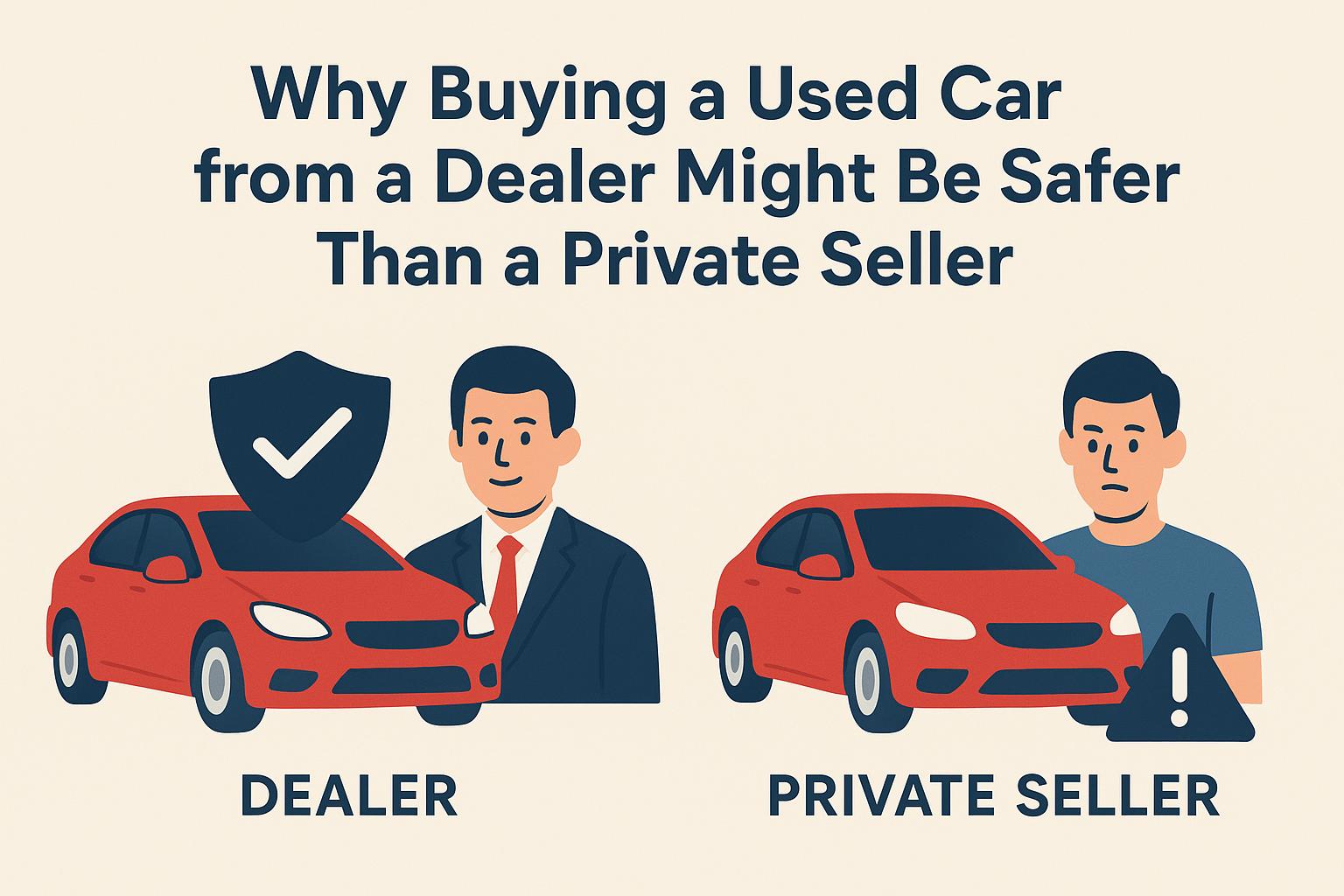
When it comes to purchasing a used vehicle, one of the most critical decisions you’ll make is whether to buy from a dealer or a private seller. Understanding the safety and reliability aspects of each option is essential for ensuring a smooth buying experience. This blog post explores the reasons why buying a car from a dealership might be the safer option compared to purchasing from a private seller.
What Are the Key Benefits of Buying from a Dealership?
Buying a used car from a dealership often comes with numerous benefits that enhance the overall purchasing experience. Dealers typically offer a range of used vehicles that have been thoroughly inspected and come with warranties, providing peace of mind that is often lacking in private sales.
Some key benefits of buying from a dealership include:
- Comprehensive Inspections: Dealerships often thoroughly inspect used vehicles before putting them on the lot, ensuring they are in good condition.
- Warranties: Many dealerships offer warranties or extended warranties that cover potential repairs, adding an extra layer of security for buyers.
- Vehicle History Reports: Dealers usually provide vehicle history reports, allowing you to make an informed decision about the car’s past.
What Are the Risks of Buying from a Private Seller?
While there are certainly pros and cons to buying from a private seller, the risks often outweigh the benefits. Unlike registered dealers, private sellers typically do not have to adhere to strict regulations, which can lead to issues for unsuspecting buyers.
Some common risks associated with private sellers include:
- Lack of Transparency: Private sellers may not disclose vital information about the vehicle’s history, leaving buyers in the dark.
- Limited Recourse: If something goes wrong after the purchase, buyers may have little recourse against private sellers.
- Inspection Gaps: Private sellers don’t always have their vehicles inspected, increasing the risk of hidden issues.
How Do Dealerships Handle Paperwork?
One of the more tedious aspects of buying a used car is managing the paperwork involved. When buying from a dealership, the process is often streamlined, allowing buyers to focus on finding the right vehicle rather than getting bogged down in documentation.
Dealerships typically handle all paperwork, including:
- Bill of Sale: The dealership prepares a bill of sale, ensuring all transactions are legally documented.
- Title Transfer: Dealers manage the title transfer process, making it easier for buyers.
- Registration: Many dealerships will even assist with registering the vehicle in your name.
Can You Test Drive a Car at a Dealership?
One significant advantage of buying a used car from a dealership is the opportunity to test drive the vehicle before making a purchase. Test driving is crucial, as it allows you to assess the car’s condition and performance firsthand.
During a test drive, you can:
- Evaluate Comfort: Ensure the vehicle meets your comfort and space needs.
- Check Performance: Assess how the car handles on the road.
- Identify Issues: Listen for unusual noises or feel for any performance issues.
What Should You Look for in a Vehicle History Report?
A vehicle history report is an essential tool when shopping for a used car, whether buying from a dealership or a private seller. These reports provide crucial information about a car’s past, helping you make informed decisions.
Key elements to look for in a vehicle history report include:
- Accident History: Check if the vehicle has been in any accidents and the extent of the damage.
- Service Records: Review maintenance records to see if the car has been properly serviced.
- Ownership History: Find out the number of previous owners the vehicle has had.
How Do Warranties Differ Between Dealers and Private Sellers?
Warranties are a significant factor to consider when buying a used car. Dealerships often provide warranties that can cover repairs for a limited period after purchase, offering buyers peace of mind.
In contrast, private sellers typically do not offer any warranties, which can lead to unexpected expenses down the line. Here are some differences:
- Types of Warranties: Dealerships may offer manufacturer warranties or extended warranties, while private sellers usually sell ‘as is.’
- Coverage: Dealer warranties often cover major components, whereas private sales provide no coverage.
- Transferability: Some dealer warranties are transferable, adding value if you decide to sell the car later.
What Are the Pros and Cons of Buying from a Private Seller?
While buying from a private seller can sometimes yield lower prices, it is essential to weigh the pros and cons carefully. Understanding these factors can help you make a more informed decision.
Pros of buying from a private seller include:
- Potentially lower prices compared to dealership listings.
- Flexibility in negotiating terms directly with the seller.
Cons include:
- Lack of warranties and limited recourse if issues arise after purchase.
- Risk of purchasing a vehicle with undisclosed problems.
How Do Car Dealerships Ensure Quality?
Reputable dealerships take several steps to ensure the quality of their used cars. By investing in inspections and reconditioning processes, they maintain high standards for the vehicles they sell.
Some common practices include:
- Thorough Inspections: Cars undergo comprehensive checks for mechanical and structural integrity.
- Reconditioning: Vehicles may be repaired and cleaned to meet dealership standards.
- Customer Reviews: Dealerships often encourage customer feedback to maintain service quality.
Should You Trust a Dealership Over a Private Seller?
Ultimately, the choice between a dealership and a private seller depends on your personal preferences and comfort level. However, many buyers find that the peace of mind offered by purchasing from a dealership outweighs the potential savings of buying privately.
Dealerships typically provide:
- Better customer service and support.
- More transparent information about the vehicle’s history.
- Robust warranties and guarantees.
Common Mistakes People Make About Buying a Car from a Dealer vs. a Private Seller
- Assuming all private sellers are trustworthy without checking their vehicle’s history report.
- Not realizing that dealerships often offer warranties that private sellers typically do not.
- Overlooking the benefits of buying from a reputable dealership, such as thorough inspections and peace of mind.
- Failing to understand that car dealers handle all the paperwork, which can simplify the buying experience.
- Neglecting to test drive a used vehicle from a dealership versus a private sale.
- Believing that all used cars at dealerships are overpriced compared to private sellers.
- Not asking the seller about the vehicle’s history, which private sellers may not fully disclose.
- Not considering the extended warranties that dealerships might offer when buying a used car.
- Ignoring the pros and cons of buying from a dealer versus a private seller, such as the risks involved.
- Assuming a private owner will provide a better deal without assessing the vehicle’s condition.
What Are the Key Takeaways?
- Buying a used car from a dealership offers several advantages, including warranties and thorough inspections.
- Private sellers may offer lower prices, but the risks often outweigh the benefits.
- Test drives and vehicle history reports are crucial in the buying process.
- Dealerships handle all paperwork, making the process easier for buyers.
- Consider the long-term benefits of buying from a reputable dealership.
In conclusion, while both options present unique advantages and disadvantages, purchasing a used car from a dealership like Premier Auto Works Inc. in Alsip, IL, offers significant benefits. From warranties and thorough inspections to streamlined paperwork, the peace of mind associated with buying from a trusted car dealership makes it a safer choice compared to buying from a private seller.
Top 10 Used Cars That Offer Great Value for Your Money

When it comes to purchasing a vehicle, finding a used car that provides great value for your money is essential. The used car market is full of options, but not all vehicles are created equal. In this blog post, we will explore the top 10 used cars that stand out due to their reliability, fuel economy, and overall satisfaction, making them perfect choices for anyone looking to buy a used car.
What Are the Best Used Cars for 2025?
Looking toward 2025, many used cars are anticipated to uphold their strong track record for reliability and impressive fuel economy. The best used cars combine affordability with excellent features, making them appealing choices for budget-conscious buyers. Notably, brands like Toyota and Honda offer some of the best options in the market.
The Toyota Corolla continues to be a top choice in the compact car segment, praised for its dependable performance and excellent fuel efficiency. Additionally, the Honda Civic is another excellent choice, known for its comfortable interior and driving experience. Both vehicles offer great value and are among the top choices for 2025.
Why Is the Toyota Camry a Top Choice?
The Toyota Camry is frequently highlighted as one of the best used cars available. It offers a roomy interior and is known for its reliability, making it a preferred option for both families and commuters. With its strong resale value and excellent fuel efficiency, the Camry proves to be a smart investment.
Moreover, the Camry comes equipped with top safety features, including advanced driver-assistance systems, making it a safe and reliable option for all drivers. The Toyota Camry frequently tops the list for buyers searching for a dependable used vehicle. Ask ChatGPT
What Makes the Honda Accord a Reliable Used Car?
The Honda Accord remains a popular favorite in the pre-owned car market, known for its blend of reliability, comfort, and performance. Renowned for its reliability and comfort, it offers a spacious interior that makes long drives enjoyable. With a reputation for being one of the best used cars, the Accord also boasts impressive fuel economy, making it a great value.
Buyers appreciate the Accord for its durable build and longevity, often serving drivers well beyond 100,000 miles. Its combination of reliability and affordability makes it a top choice for anyone looking to buy a used car.
Are Used SUVs a Good Investment?
When considering a reliable vehicle, used SUVs often provide the best of both worlds: space and versatility. Models like the Toyota RAV4 and Honda CR-V have gained popularity due to their practicality and efficiency.
Both SUVs offer excellent fuel efficiency and a comfortable interior, making them suitable for families and adventure seekers alike. The versatility of a used SUV can make it a great investment, especially for those who need extra space without sacrificing reliability.
How Do Compact Cars Offer Great Value?
Compact cars are often overlooked, but they provide excellent value for money. Models like the Ford Focus and Hyundai Elantra are known for their affordability and efficiency. These vehicles often come with modern technology features such as Apple CarPlay and Android Auto, enhancing the driving experience.
With lower maintenance costs and impressive fuel economy, compact cars are an ideal choice for city driving. They are easy to park and maneuver, making them perfect for those who prioritize convenience and affordability.
Which Sports Cars Are Worth Considering in the Used Market?
For those looking for a bit of excitement, used sports cars can offer a thrilling driving experience. Cars such as the Mazda MX-5 Miata and Ford Mustang have earned a reputation for both strong performance and dependable reliability.. These cars tend to hold their value well and can provide buyers with great deals in the used market.
While sports cars may not always be the most economical choice, finding a reliable used model can ensure that you enjoy both performance and value. It’s essential to research the specific model’s reliability ratings and maintenance costs before making a decision.
How to Choose a Used Car That Meets Your Needs?
Choosing a used car involves several considerations. First, determine your budget and what features are essential for your lifestyle. Whether you’re looking for fuel efficiency, space, or luxury features, knowing your needs will help narrow down your options.
Next, research the reputation of various models. Look for cars that have high reliability ratings and good resale value. Online reviews and ratings can provide valuable insights into which vehicles are the best choices for your money.
What Should You Look for in a Reliable Vehicle?
When searching for a reliable used vehicle, pay attention to factors such as maintenance history and mileage. A well-maintained car with lower mileage will often provide better performance and longevity. Also, take into account how easily you can find parts and access repair services for the particular make and model you’re interested in.
It’s also wise to check for any safety recalls or common issues reported by other owners. Understanding the vehicle’s history can help you avoid potential pitfalls and find a car that truly offers great value.
Where to Find the Best Used Cars for Sale?
Finding the best used cars for sale requires a bit of research. Start by exploring reputable used car dealerships in your area. Websites that aggregate listings from various dealers can also be helpful for comparing prices and features.
Don’t forget to check local classifieds and online marketplaces. These platforms can often list vehicles at competitive prices, allowing you to find excellent deals on reliable used cars.
Conclusion
- Research the best used cars, including the Toyota Camry, Honda Accord, and popular SUVs.
- Compact cars offer great value and are ideal for city driving.
- Don’t overlook the potential of used sports cars for a thrilling experience.
- Always check the vehicle’s history and maintenance records before purchasing.
- Explore various platforms to find the best deals on used cars.
In conclusion, when you’re looking to buy a used car, it’s essential to consider reliability, fuel economy, and overall value. With options like the Toyota Camry and Honda Accord, you’re sure to find a vehicle that meets your needs. For those in search of the best deals, consider visiting Premier Auto Works, a reliable used car dealership in Alsip, IL, where you can explore a wide range of used cars for sale that offer great value for your money.